How to Understand Sanskrit
it's not that hard I promise

**IF YOU SKIM THIS ARTICLE IT WON’T MAKE ANY SENSE**
*take it slow, what’s the rush?*
Patanjali’s Sutras
Lately I've been reading Patanjali's yoga sutras, a 5000+ year old work of literature encompassing all of yogic science in a few short phrases or sutras.
Sutras means “string” or “thread”; a sutra is a distilled string of syllables or words which describes an aphorism or rule. They are distilled.
I've been trying to integrate the structure of the work into modern American life and my friends are starting to think I'm insane, so I'm going to try and explain what I'm going on about. It might make more sense if you read my fractal article first.
Fractals
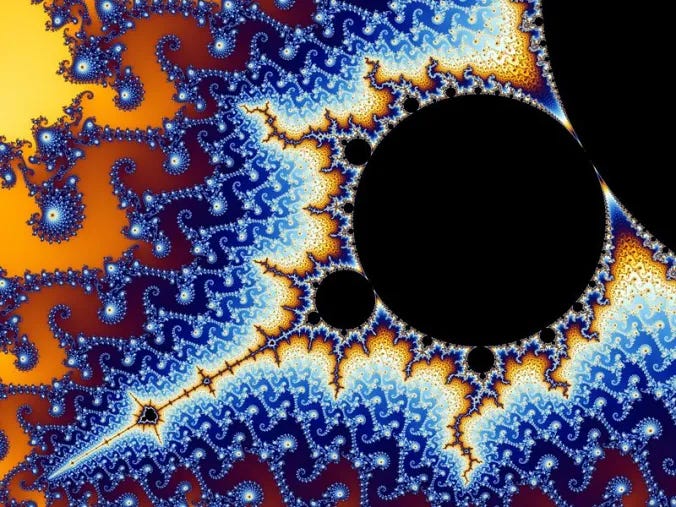
A fractal has two components:
Self Similarity
Infinite Complexity from Simple Rules
Math can be used to generate fractal images
Self?
Self means "akin to." It' a pretty abstract word, but we incorporate it into language effortlessly. I am myself, pain can be self-induced, you can self-publish a book.
In Yoga, Self can refer to the body, the ego, or the "true self" which in Sanskrit is called Atman
Similarity?
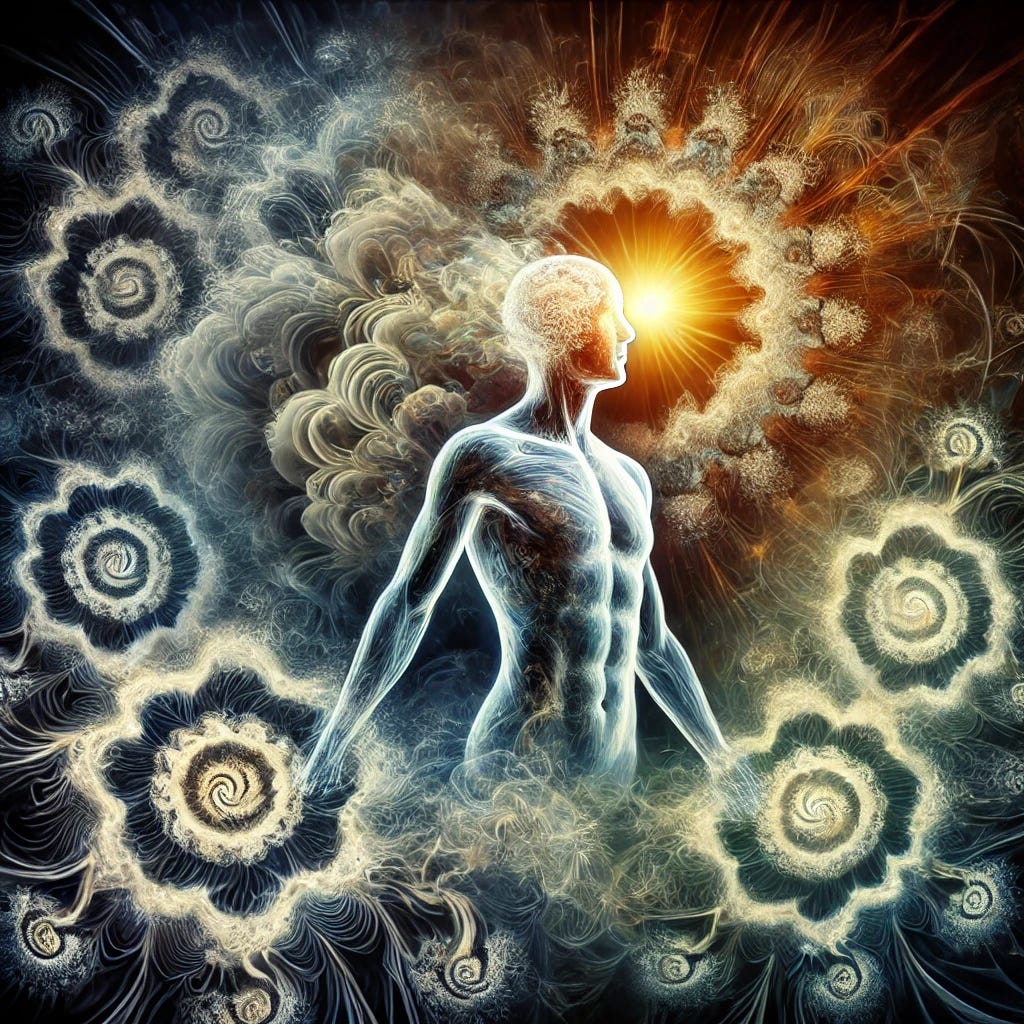
Similar means "having characteristics in common : strictly comparable"
A baseball is similar to a softball
A cup is similar to a bucket
A squirrel is similar to a deer
Self : Similarity?
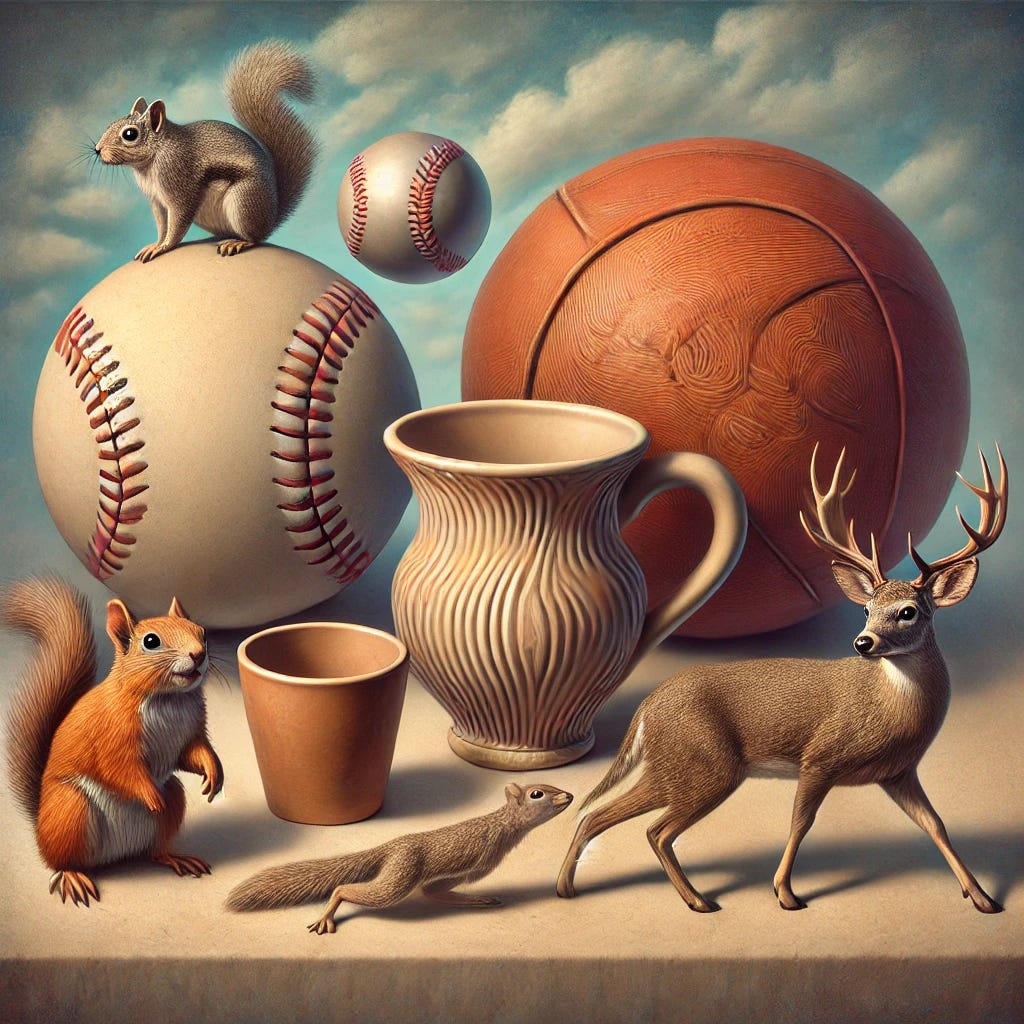
akin to : strictly comparable
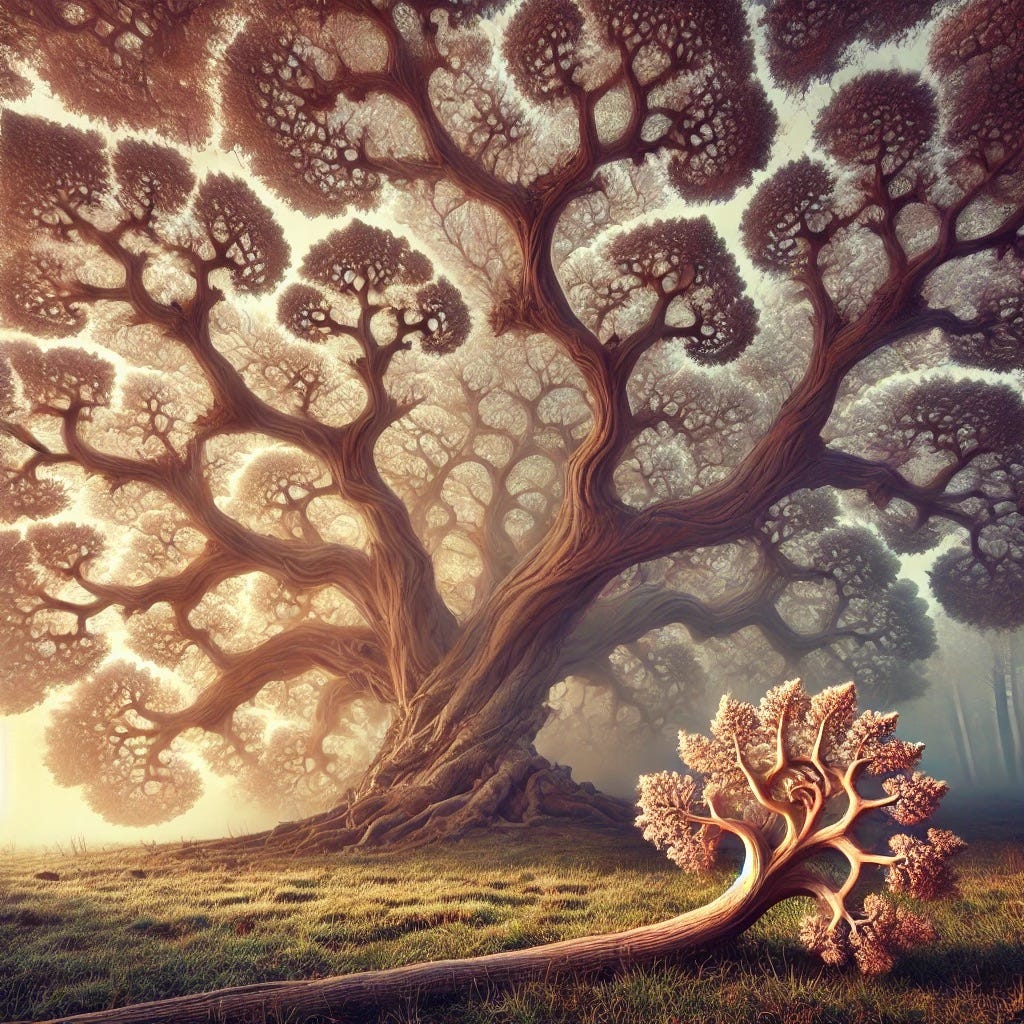
Self similarity is a funny phrase; it's almost like saying "self self." In a more practical sense, it's like how the shape of a small twig you pick up on the ground has self similarity to the shape of the tree that it came from.
Sanskrit?
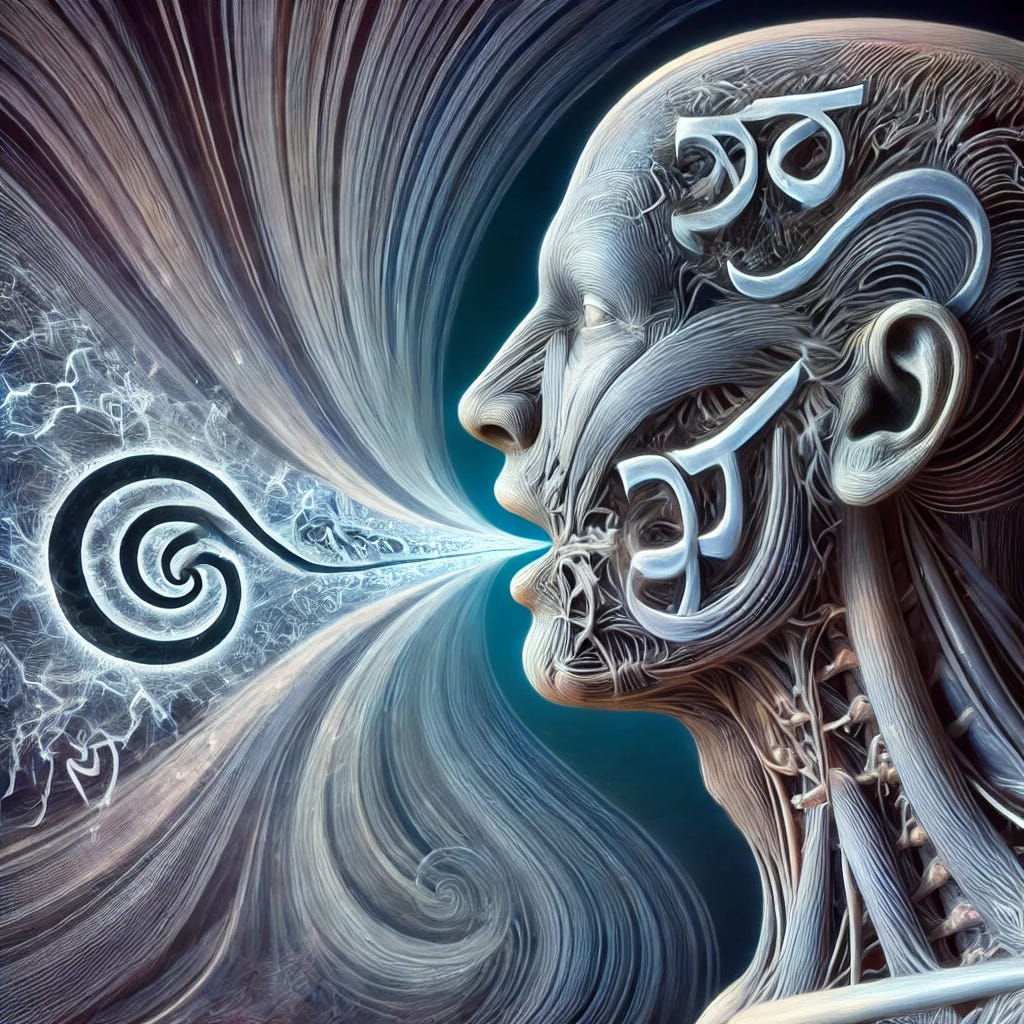
Sankskrit is based on Human Anatomy: The sounds of Sanskrit are based on the way the body produces syllables. If we are going to call the body "the self," then the sounds that you make, using the shape of the body, are "similar."
The "sound" is based on the shape of your mouth and throat.
Drum example
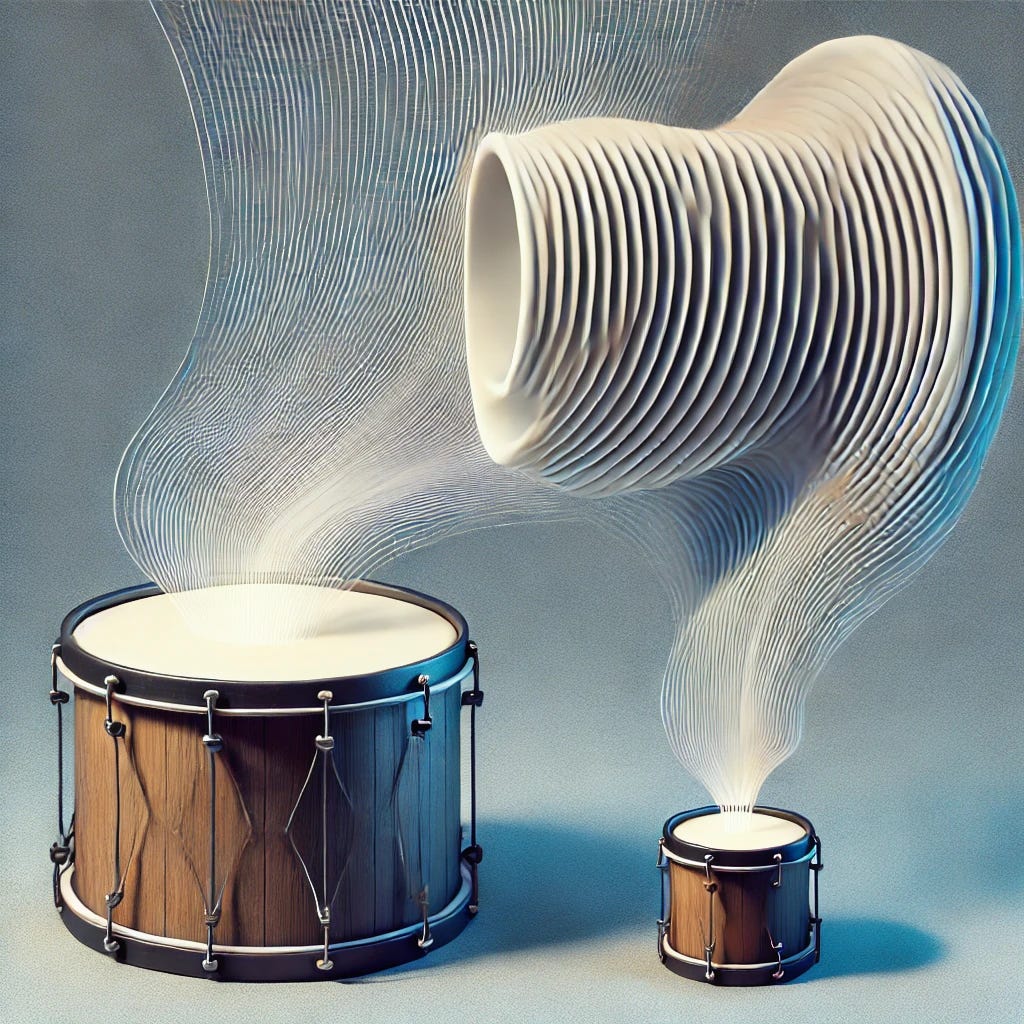
A big drum makes a deep, low, big sound.
A little drum makes a higher, little sound.
The sounds are similar to the physical shape of the drum.
Patanjali's Sutras
The book that I have is called "The Yoga Sutras of Patanjali: translation and commentary by Sri Swami Satchidananda." It contains the work of Patanjali in Sanskrit. I can't read Sanskrit, but fortunately there's commentary in English.
The structure of the work is based on the same fractal principles of Self Similarity… let me explain.
The Ineffable
Yoga or any spiritual tradition is based on concepts that don't translate to words. "The infinity of the cosmos", "the macrocosm and the microcosm", and "pure consciousness" are people's attempts to splash words on something inexplicable.
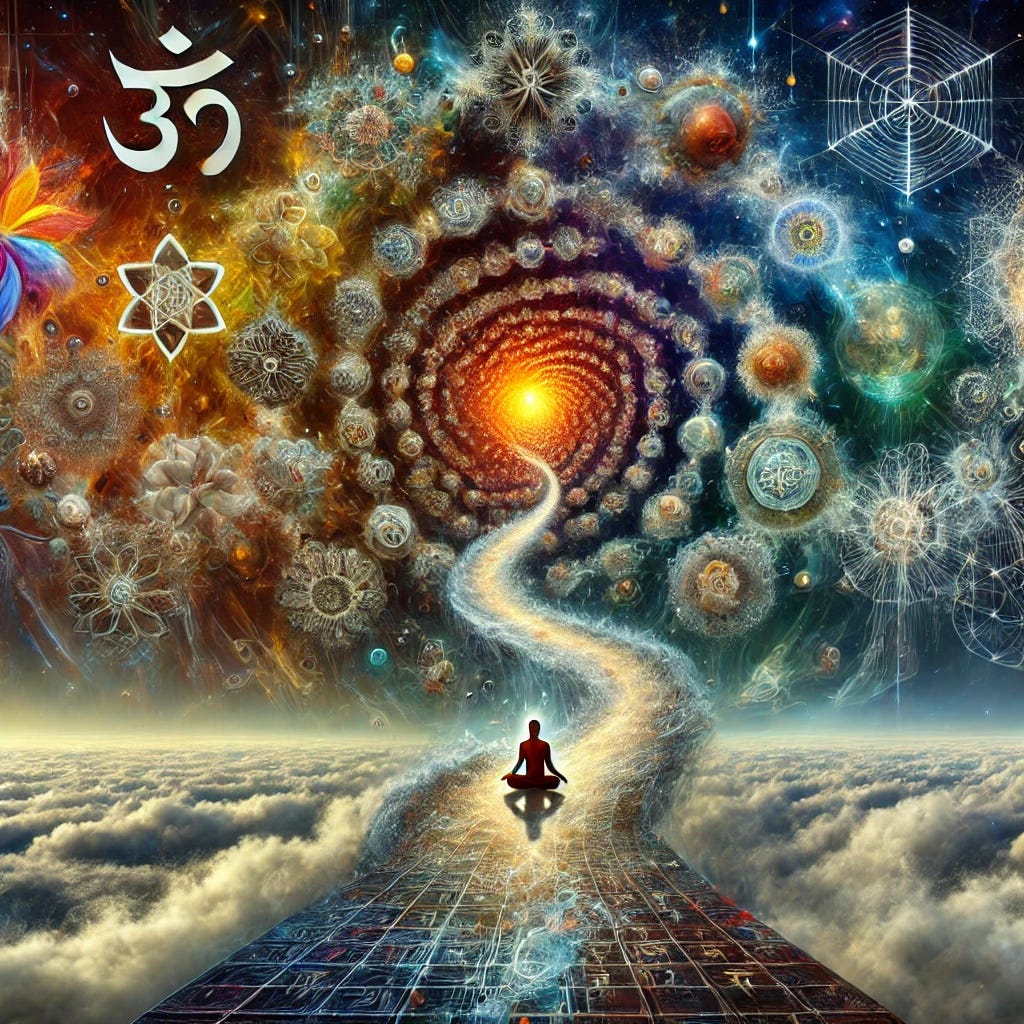
We can't explain the experience, we can only explain the path, and to do that we need some sort of medium. Patanjali and Satchidananda work up fractally, from the totally incomprehensible, to slightly more comprehensible, to relatively straightforward. You don't need to literally be able to read Sanskrit to be able to understand; the structure itself is the important part.
Words in Print
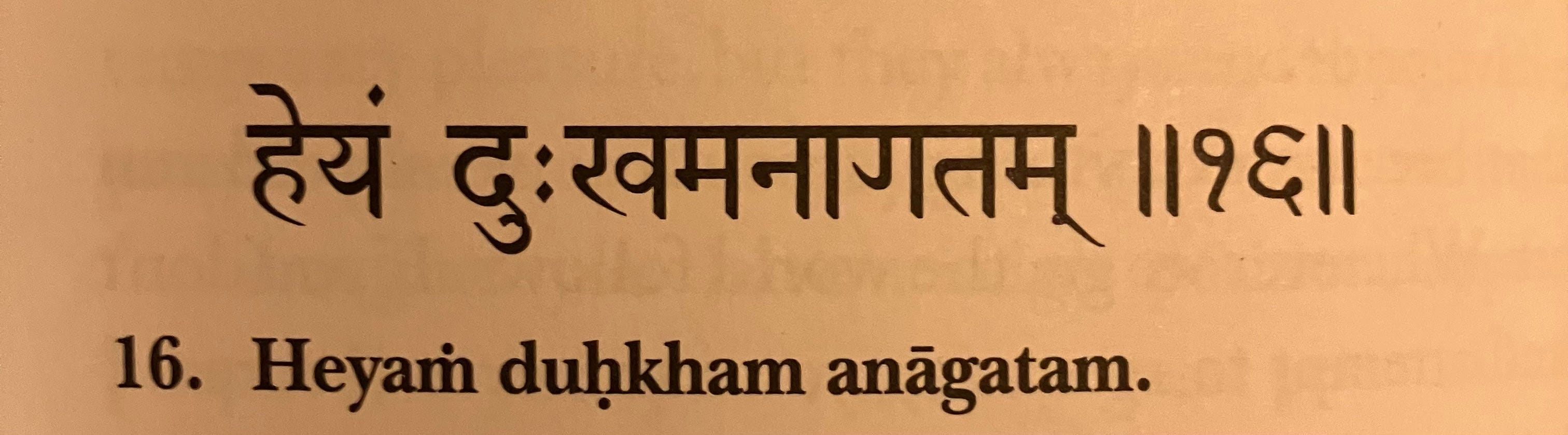
Satchidananda starts us off with the Sanskrit characters. Presumably it holds timeless knowledge, but I don't know how to read it and you probably don't either, so it doesn't really help us.
Next, he gives us something slightly more intelligible :
"Heyam duhkḥam anāgatam"
Also not really helpful, but at least I could baby talk it at someone if I really had to. Sanskrit is strictly phonetic, so if I studied a bit I could probably even pronounce it right.
Luckily, Satchidananda speaks English, and has kindly provided a translation:
Heyam = avoid, prevent; duhkḥam = pain; anāgatam = not yet come, future.
Now we can kind of get what he's saying. The Sanskrit phrase (probably) reads like
avoid, prevent, pain, not yet come, future
Lastly, our good friend Satchi provides syntactical English:
"Pain that has not yet come is avoidable."
That makes sense to me, I like that. We create our own suffering, focus on the here and now, don't suffer the future before it arrives. Gotcha.
The rest of Patanjali reads the same. Some sutras have a few pages of explanation. The one about pain is just a phrase; it's easy to understand but takes practice to actually live it.
To me, the biggest lesson in Patanjali is the structure, the fractal of communication. We need to keep breaking down the concepts of what we are talking about until the person we are talking to can resonate with what we are saying.
A lot of times people talk to each other but their words aren't landing, they're just spraying words based on what's in their own head. To actually listen is just basic social skills, but when we say so many words all the time we forgot the basics.
What I've been doing lately, is trying to run concepts in the reverse, toward the more simple, more condensed. A huge concept can be communicated in five words, if the person you're talking to is receptive, if they know that each word is loaded with meaning, and takes the time to actually think about what you're saying.
If they're not receptive, it just sounds like gibberish.
Memes???

Memes are based on the same idea. An idea gets condensed down into a tiny, compact, seed of a concept which is easily spread and easily understood. People collectively agree that the memes mean the same things, kind of like how people agree that currency means the same thing.
Fun Exercise
I've been having fun trying to condense people's ideas, their riff, their endeavor, their project, into a few words. For example, my friend Kevin is working on a project called Flex and Paint. He emphasizes the healthy benefits of exercise and art. He showcases and teaches aesthetics. He's encouraging people to live healthier, more fulfilled lives by lifting weights and being creative. He's a personal trainer, offers fitness advice and sells art.
or:
flex paint encouragement mobility environment aesthetic

Free Pottery
My current project is called Free Pottery. It's an infrastructure project and social experiment. It's based on what I've learned about neuroplasticity; pottery is a great medium to help rehabilitate people with sensory issues and attention problems. The act of making pottery is therapeutic. I want to help as many people have access to the material infrastructure of pottery as possible, so they can experience the health benefits.
free pottery sensory therapy infrastructure
AI
This is where things start to seem off the rails. With AI, you can generate images about crazy concepts with just a couple words. Check out this dogecoin patanjali riff. It's fun, it's funny, it's a cosmic joke.
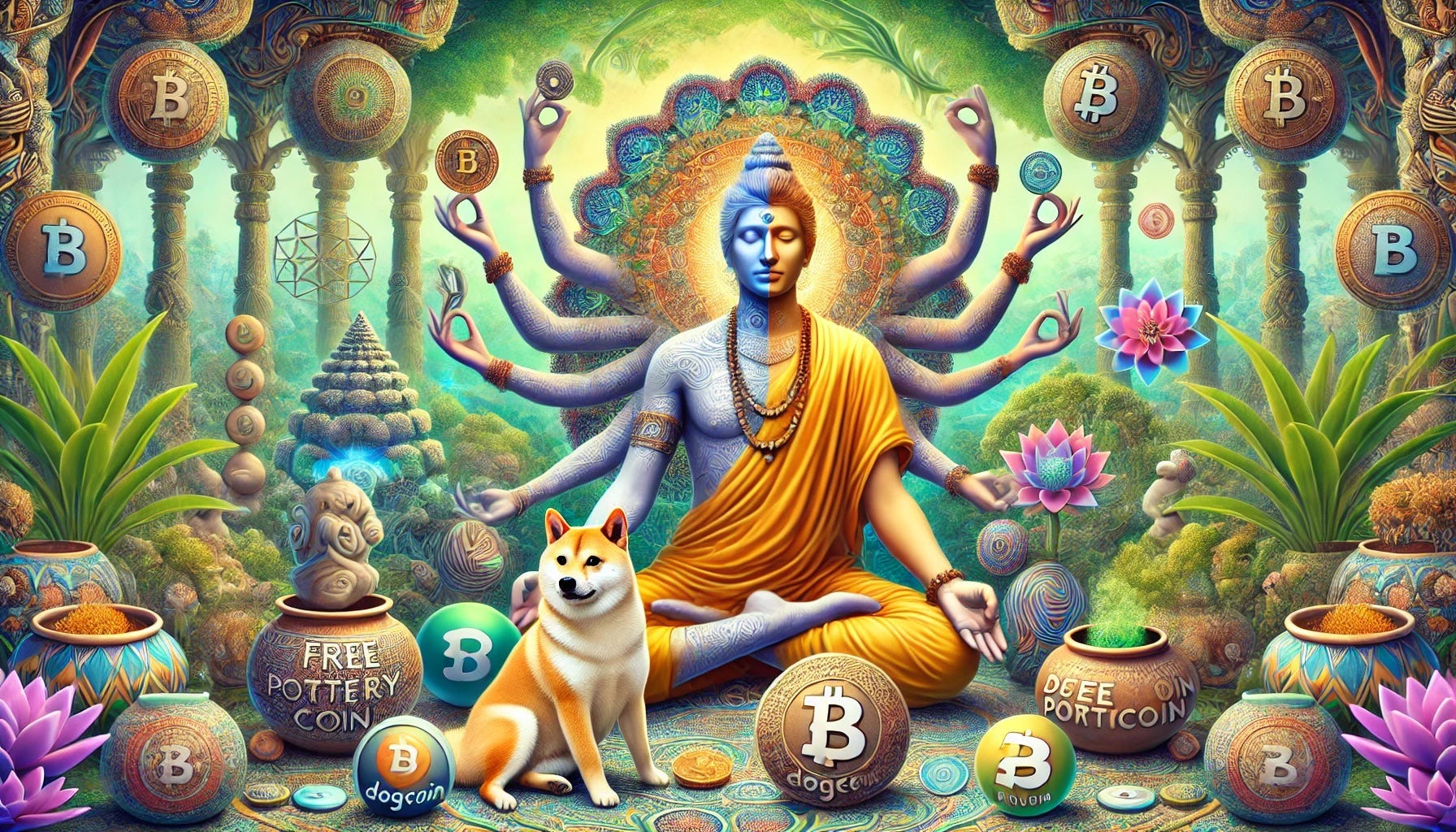
complex structures simple rules nonviolence free pottery
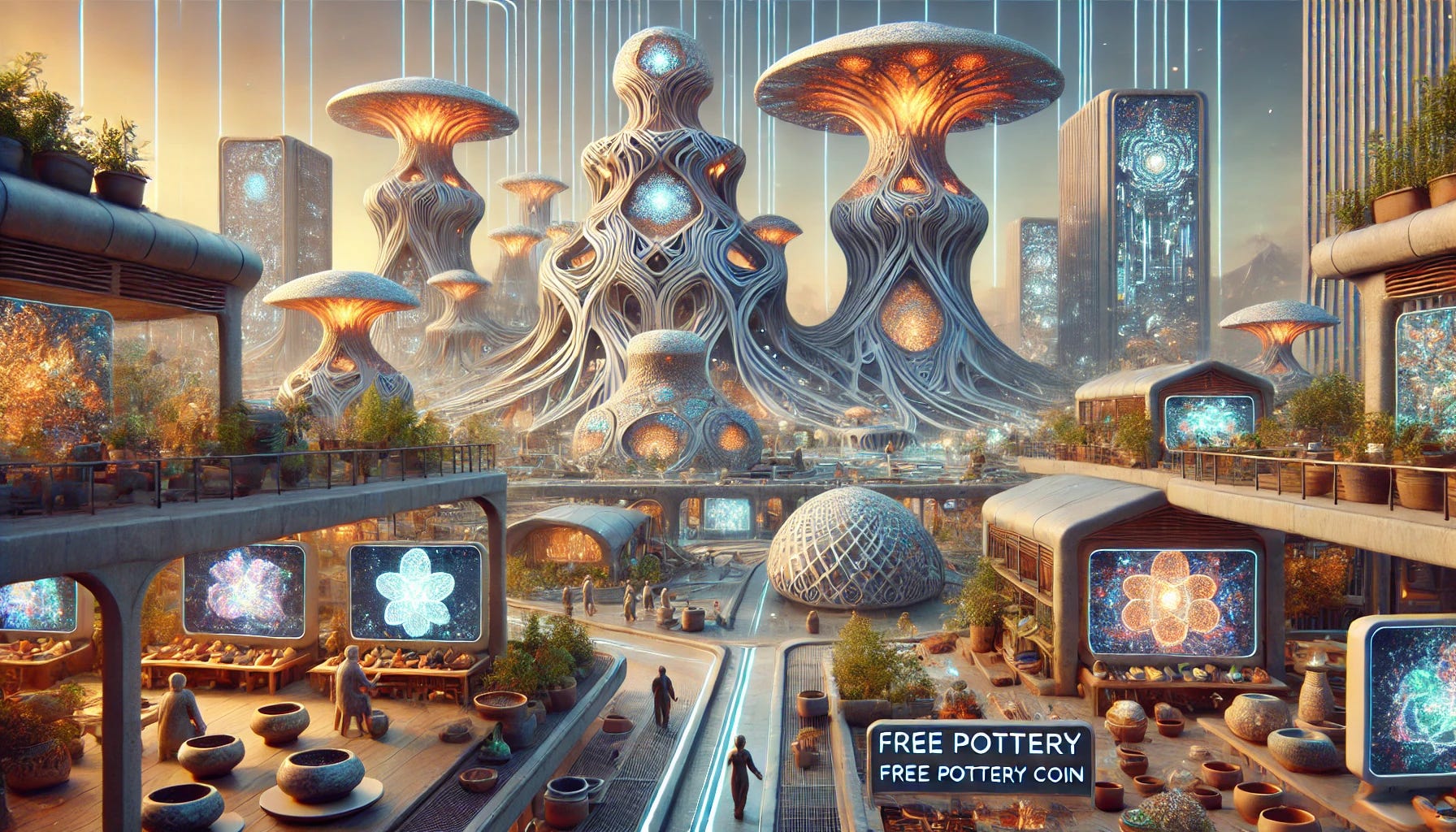
"The value is the concept itself"